02/Mar/2026
16 Years of Luggage Excellence
Your Reliable Global OEM/ODM Partner
Learn More


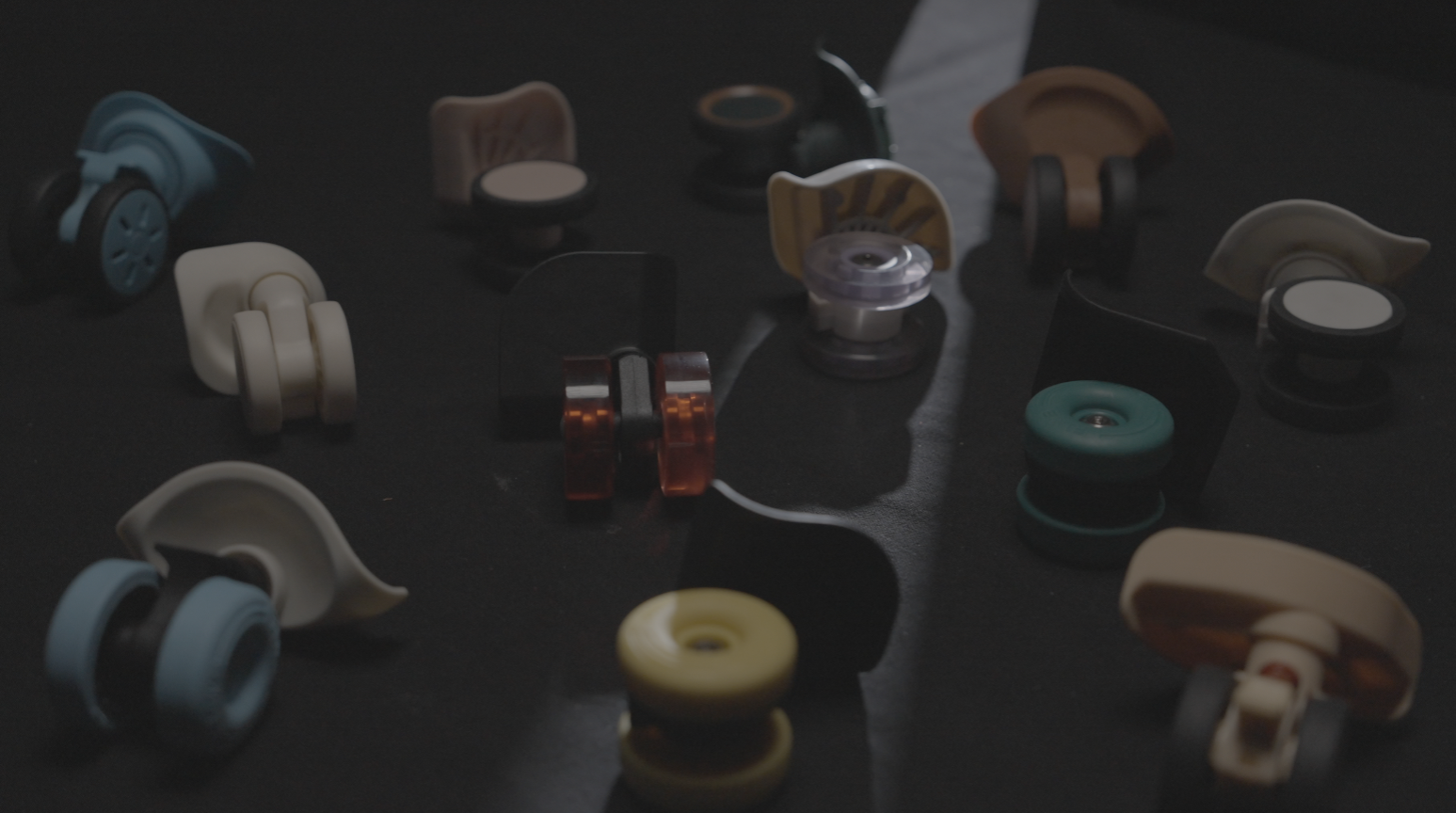
While wheel structure determines how luggage moves, the material defines how long it lasts and how it feels in real use. From noise level to durability, from cost to user experience—wheel material plays a decisive role.
At Greatchip, we engineer wheel systems not only for movement, but for real-world performance across different travel environments. Here's a breakdown of the most common luggage wheel materials and how to choose the right one.
1. PP (Polypropylene) — Cost-Effective and Lightweight
PP is commonly used in basic wheel structures or inner cores due to its low cost and lightweight properties.
Advantages:
Economical and widely available
Lightweight, suitable for budget products
Limitations:
Lower wear resistance
Higher noise during rolling
Less smooth user experience
Best for:
Entry-level luggage, price-sensitive markets, and short-term usage scenarios.
2. PVC (Polyvinyl Chloride) — Basic and Durable
PVC wheels offer slightly improved durability compared to PP, often used in lower-to-mid range luggage.
Advantages:
Better wear resistance than PP
Affordable cost
Acceptable durability for general use
Limitations:
Harder material leads to more noise
Less shock absorption
Best for:
Mass-market products where cost control is important.
3. TPE (Thermoplastic Elastomer) — Quiet and Flexible
TPE is widely used in silent wheels due to its rubber-like elasticity and excellent noise reduction.
Advantages:
Excellent noise reduction (quiet rolling)
Good flexibility and shock absorption
Smooth and comfortable user experience
Limitations:
Higher material cost
Requires better bonding with wheel core
Best for:
Mid-to-high-end luggage, urban travel, business travelers, and premium brands.
4. Rubber-Coated Wheels — Premium Feel and Performance
Rubber-coated wheels typically feature a strong inner core with an outer rubber layer for enhanced performance.
Advantages:
Superior noise control
Excellent grip and stability
Limitations:
Higher production cost
Heavier than basic materials
Best for:
High-end markets, premium luggage collections, and frequent travelers.
5. PU (Polyurethane) — The Balance of Durability and Comfort
PU is one of the most widely preferred materials for high-quality luggage wheels, offering a balance between durability, smoothness, and noise control.
Advantages:
High wear resistance and long lifespan
Smooth and stable rolling
Good noise reduction
Strong load-bearing performance
Limitations:
Higher cost compared to PP/PVC
Requires precise manufacturing
Best for:
Mid-to-high-end luggage, export markets (US/EU), and long-term use products.
How to Choose the Right Material for Your Market
Material selection should align with your product positioning and target market expectations:
Budget markets: PP or PVC for cost efficiency
Mid-range products: PU for balanced performance and durability
Premium markets: TPE or rubber-coated wheels for quiet, smooth experience
At Greatchip, we often combine materials—such as PP inner core with TPE or PU outer layer—to achieve the optimal balance between cost, durability, and performance.
Conclusion
Wheel material is not just a technical detail—it directly impacts user satisfaction, product lifespan, and brand perception. Choosing the right material means delivering the right experience to the right market.
Greatchip — Built on Details That Define Quality.